News Details
2026 Bionic Robot Industry Explodes: Embodied AI Breaks Through Technical Barriers; Consumer Segment Enters Mass Adoption Phase
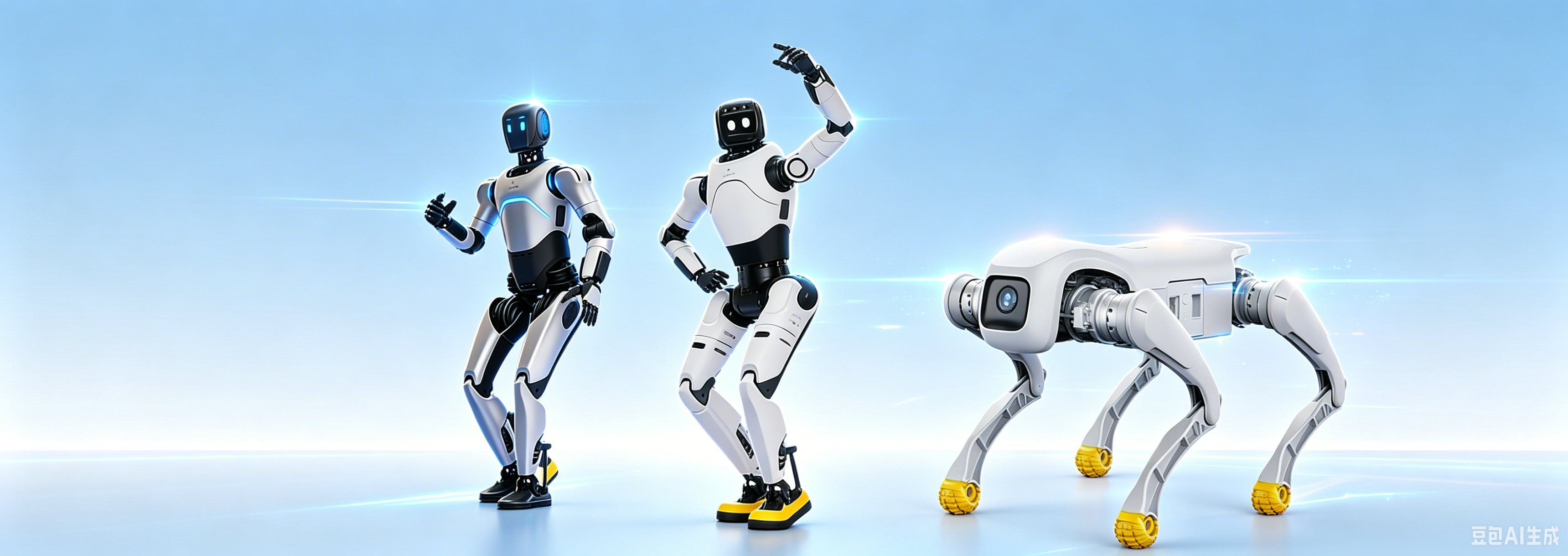
2026 Bionic Robot Industry Explodes: Embodied AI Breaks Through Technical Barriers; Consumer Segment Enters Mass Adoption Phase
2026 is widely recognized in the industry as the year of bionic robots.First Year of Commercial Mass ProductionThis year marks a pivotal moment for the commercialization and explosive growth of embodied AI. With domestic core components achieving full localization and AI physics reasoning models continuously iterating, bionic quadruped and humanoid robots—once confined to labs and exhibition stages—are now breaking out of high-end tech circles. They are rapidly penetrating diverse scenarios including innovation competitions, industrial inspections, public services, and emergency response. The industry is undergoing a transformative leap from "technical showcase" to "scalable deployment," emerging as one of the hottest tracks in artificial intelligence and advanced manufacturing.
Unlike traditional industrial robots with fixed, single-purpose operations, next-generation bionic robots leverage bionic limb structures and embodied AI algorithms to replicate biological movement logic. They offer exceptional environmental adaptability, perfectly suited for complex unstructured scenarios. This year, domestic bionic robotics technology has achieved multiple breakthroughs: mass production of core components such as lightweight bionic composite materials, low-power micro servo motors, and flexible tactile sensing films has broken overseas high-end technology monopolies, significantly reduced overall system costs, eliminated price barriers for consumer-grade bionic robots, and ushered in an era of widespread accessibility.
Technological and algorithmic innovations are driving core industry growth. The deployment of new open-source humanoid robot motion foundation models and manifold topology-preserving world models has endowed bionic robots with human-like spatial intuition and physical reasoning. Without tedious motion capture training, precise action sequences can be rapidly generated via text or video commands. Capabilities in autonomous perception, path planning, dynamic balance, and obstacle adaptation have seen exponential improvements, enabling the robots to autonomously navigate complex scenarios such as uneven terrain, staircases, confined spaces, and dynamic obstacles. This marks a qualitative leap in intelligence and autonomy.
Innovation competitions have become a critical real-world testing ground for the practical deployment of biomimetic robot technology. Recently, cities across the country have launched intensive obstacle challenge events for biomimetic dog robots. These events feature standardized 10m × 6m professional tracks equipped with multi-dimensional obstacles, including dynamic balance on seesaws, hill climbing over arch bridges, tunneling through transparent enclosures, navigating tire mazes, traversing uneven terrain, and climbing stairs. These scenarios comprehensively evaluate core capabilities such as center-of-gravity control, adaptive posture adjustment, autonomous obstacle avoidance, and precise locomotion. All participating robots operate fully autonomously without human intervention, executing smooth, stable, and precise movements that demonstrate the mature motion control and intelligent perception technologies of domestic biomimetic robots.
According to the latest industry data, in 2026, China's bionic robot market continued its rapid growth. Exports of humanoid and quadruped robots surged, establishing a new growth engine for Chinese high-end manufacturing going global. Unlike the previous year's focus on industrial applications alone, 2024 saw diversified deployment scenarios. Beyond professional use cases such as factory inspections, hazardous environment operations, and emergency rescue, consumer-grade applications—including STEM education, cultural tourism displays, home companionship, and intelligent services—are emerging rapidly. Affordable models priced at tens of thousands of yuan are now widely available, bringing bionic intelligence into everyday life.
Industry experts analyze that 2025 was the foundational year for breakthroughs in bionic robot technology iteration, while 2026 officially launched the industry's scaled leap into "10-100". As the supply chain continues to mature, core technologies advance, and costs decline, the barriers to deploying bionic robots are lowering. No longer niche tech products, they will increasingly replace repetitive and high-risk manual roles. In the future, bionic robots combining flexibility, intelligence, and practicality will become integral to STEM education, public services, smart homes, and more.
Today, China's biomimetic robotics sector has established a new development landscape characterized by technological autonomy, robust production capacity, diverse application scenarios, and accelerating global expansion. Leveraging a complete domestic supply chain and continuously evolving embodied AI technologies, Chinese biomimetic robots are leading the global market, unlocking new intelligent technology scenarios and applications, and driving innovation in AI industrialization and advanced manufacturing upgrades.
Got a similar need? Contact us now.
Tell us your needs, and we'll create a custom solution for you.
Get a QuoteRelated News

Try Robot Show Now
Professional team offers one-stop robot rental solutions to add a high-tech feel to your event.
Get a Quote
Scan to order

Scan to follow on Douyin

Scan QR code to chat on WeChat